
By Charles LaVell Scott, MArch, MBA
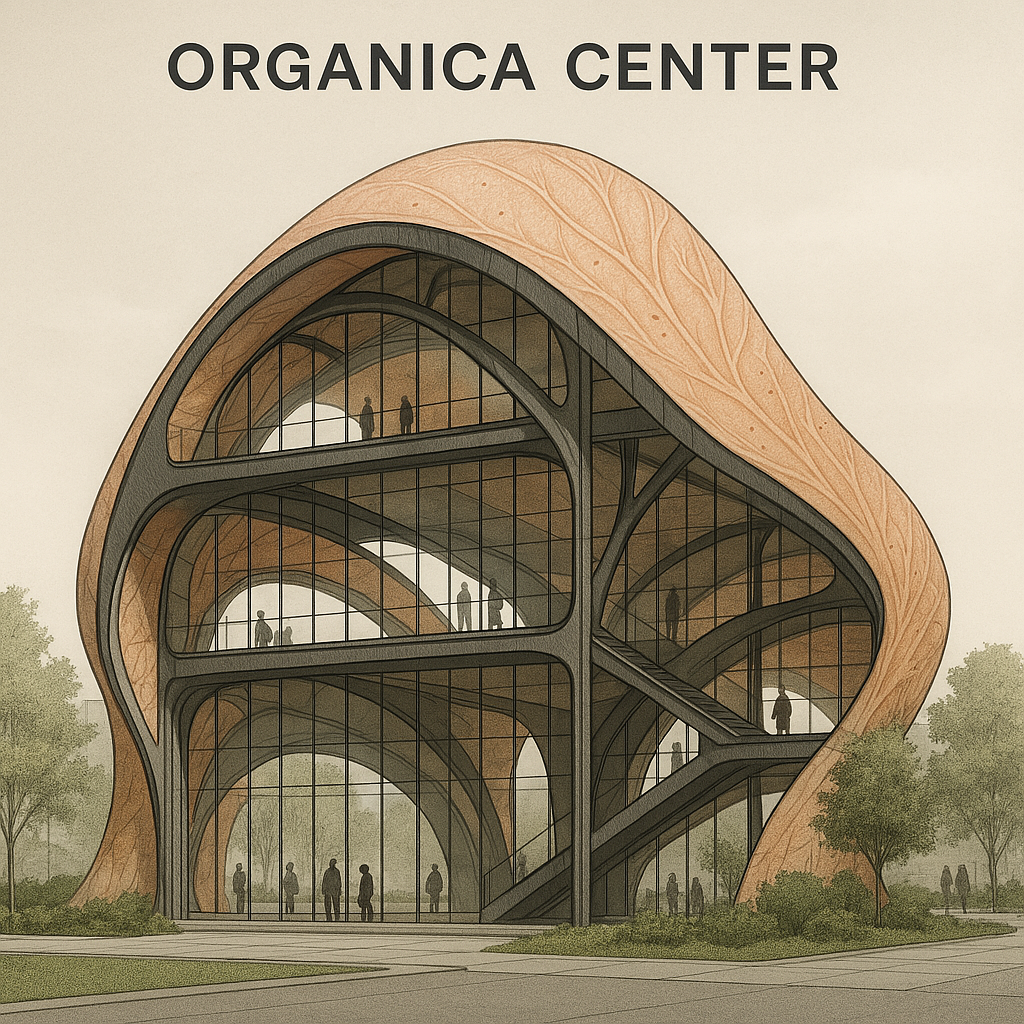
As the boundaries between biology and architecture dissolve, a provocative question emerges: Can buildings become alive? More than metaphor—this is a literal inquiry at the convergence of synthetic biology, environmental design, and programmable matter. Fueled by technologies like CRISPR-Cas9, we are entering a design era where living organisms and built environments may not just coexist, but coevolve.
A New Material Paradigm
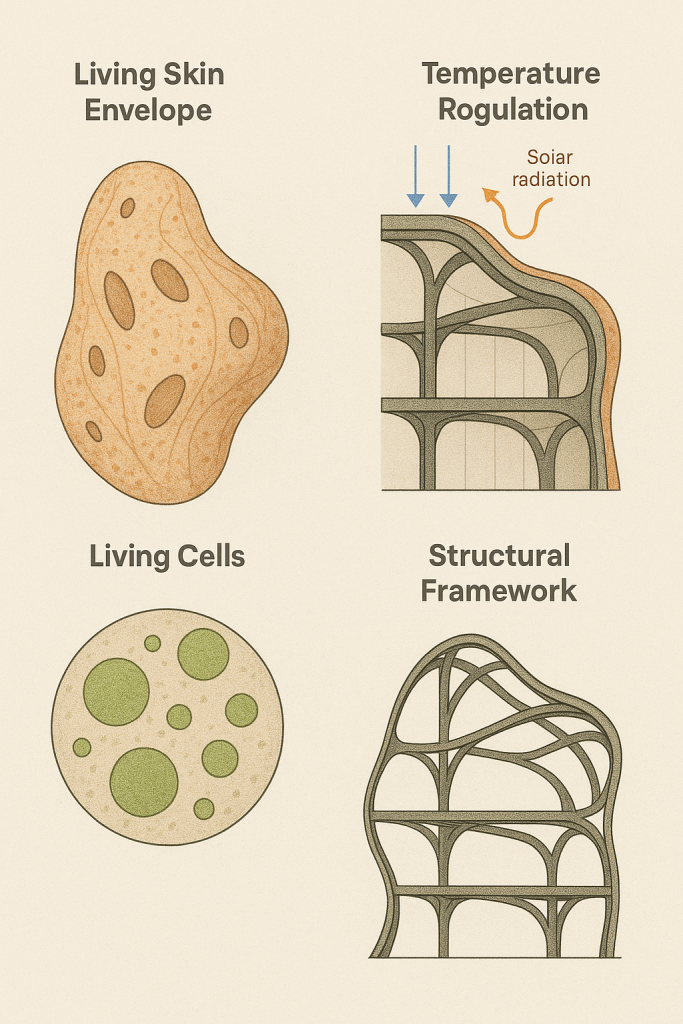
Traditional materials—concrete, steel, glass—are static. But nature provides a blueprint for dynamic systems that breathe, adapt, and regenerate. Bioengineers are now using CRISPR to reprogram the DNA of living cells to express specific properties: photosynthesis, thermal regulation, radiation shielding, and even self-repair.
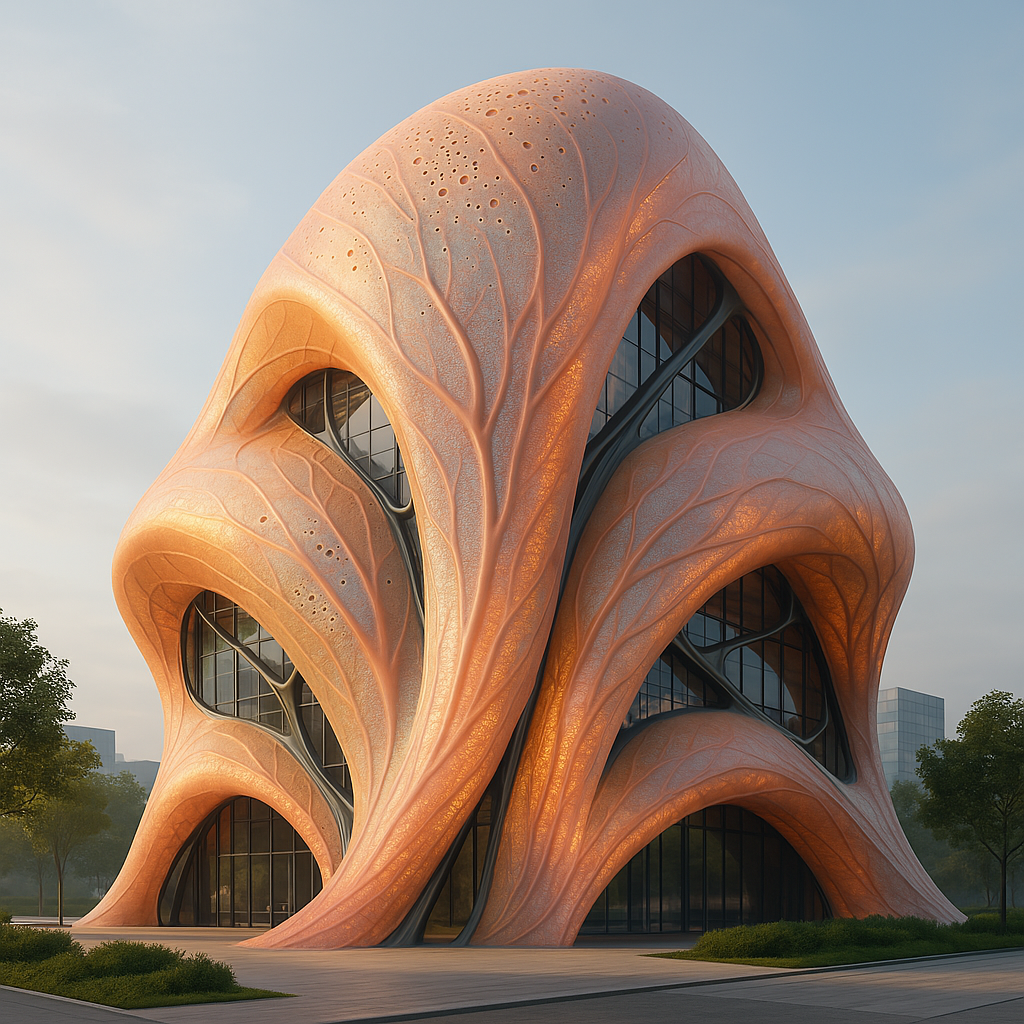
Imagine an architectural envelope that mimics the dermal intelligence of skin: opening pores in heat, tightening against cold, producing melanin-like pigments in response to UV radiation. By modifying bacterial cellulose, mycelium, or algae-based systems using CRISPR, we could create building skins that actively mediate their environment, dramatically reducing our reliance on mechanical systems.
Bioengineered Intelligence
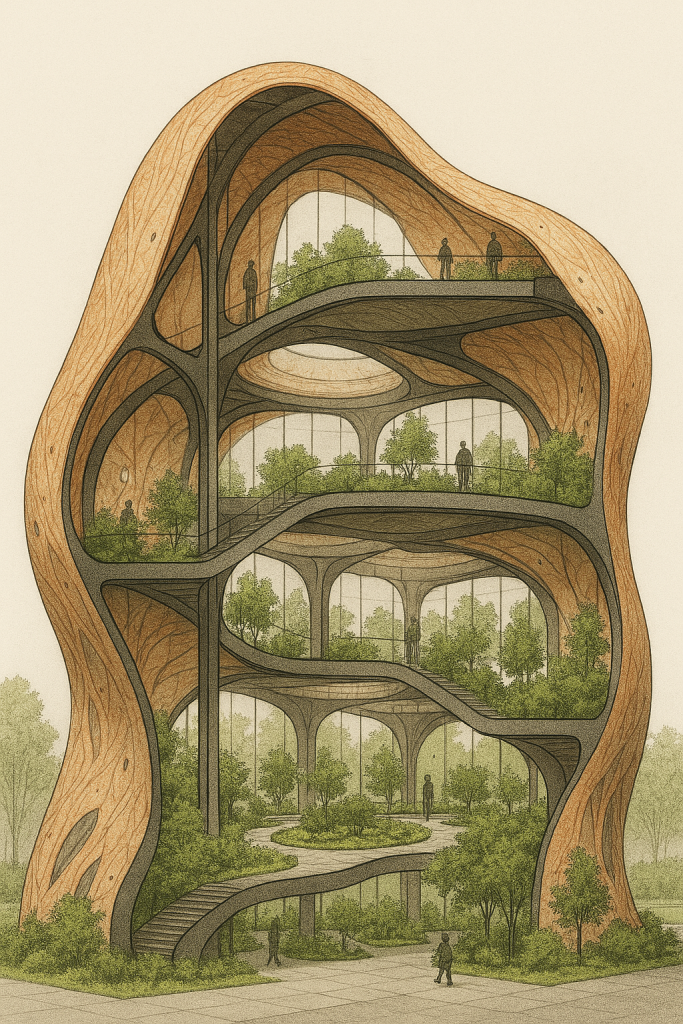
Living architecture isn’t just about surface performance—it’s about intelligence. CRISPR allows the precise control of gene expression, enabling us to program behavior into material systems. A wall, infused with light-sensitive cyanobacteria, might brighten or dim depending on sunlight levels. Mycelium-based structures could thicken in response to structural load or repair micro-fractures on demand.
The future of sustainable architecture may not lie solely in smarter machines—but in smarter biology.
Real World Prototypes
Self-healing concrete, made with CRISPR-edited bacteria that produce limestone when exposed to water. Synthetic spider silk, biofabricated in yeast for tensile structures. Responsive biofilms that change color, permeability, or shape in response to stimuli. NASA’s plans for Martian bio-construction, using engineered algae and mycelium.
Ethics and the Designer’s Role
Designing with life raises new ethical dimensions. Who “owns” a genetically engineered material? What are the ecological consequences of synthetic organisms outside the lab? As architects, we are not just shaping space—we are now shaping species.
Our role expands from builder to biocurator, forging collaborations with scientists, environmentalists, and ethicists.
Conclusion: Toward a Living Architecture
This isn’t science fiction. It’s a design manifesto for the coming decades. As CRISPR continues to unlock the language of life, we as architects have the opportunity—and responsibility—to write with it.
Let us imagine not just greener buildings, but living ones—structures that breathe, feel, heal, and grow.
Leave a Reply