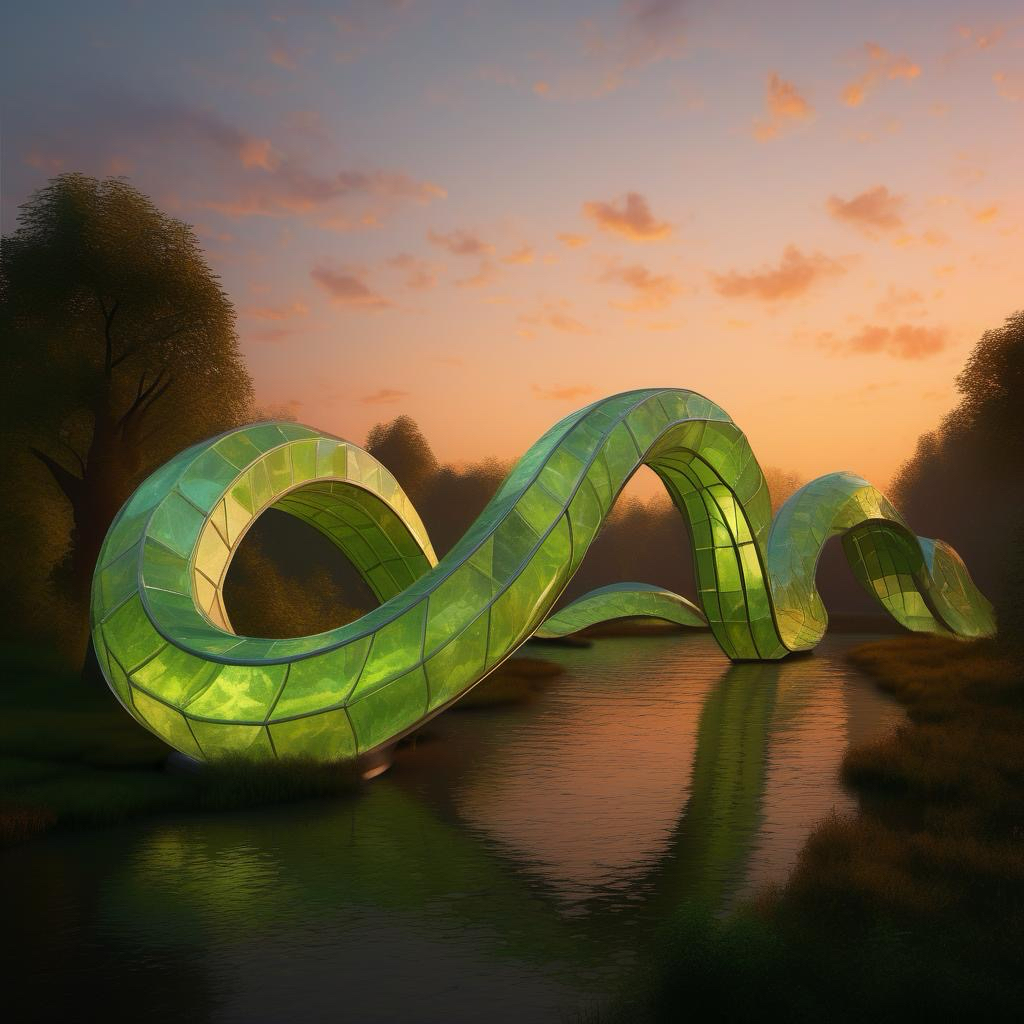
Symbiotic Architecture at the Edge of Ecology and Innovation
Architecture as Symbiont: Designing with Biophotons, Water Memory, and Living Skin
By Charles LaVell Scott – MArch, MBA | Christ Alexander Design

Abstract
HydroSerpent reimagines architecture not as object but as organism—a living, breathing construct symbiotically integrated into the natural cycles of light, water, and life. Situated in the Danube Delta, this biomimetic structure merges biophotovoltaics, hydropower, and microbial symbiosis into an architectural system capable of producing energy, filtering water, regulating climate, and enhancing human health. More than a passive shelter, HydroSerpent operates as a living interface between the built and natural worlds, attuned to circadian rhythms, river dynamics, and biophilic stimuli. The project showcases innovations in photosynthetic skin technologies, hydrokinetic turbine systems, and dynamic adaptive membranes. Through its integration of sensory-responsive spaces, moss-activated filters, and kinetic lung chambers, it offers a new paradigm for human-centered, ecologically-attuned design. This article presents the scientific, ecological, and experiential design foundations of HydroSerpent, a work at the confluence of bio-integrated architecture and ecosystem engineering.
1. Introduction: The Need for Bio-Integrated Design
In the Anthropocene era, architecture faces a pivotal challenge: to evolve beyond anthropocentric dominion and toward integrated systems that coexist symbiotically with the biosphere. Climate instability, biodiversity loss, and urban disconnection have catalyzed a paradigm shift—from buildings as static entities to living systems that respond, regenerate, and restore. The HydroSerpent proposes a radical reintegration of architecture with ecosystem intelligence, drawing upon biomimicry, ecological engineering, and the sensory needs of human physiology. As an architectural symbiont, it does not simply resist environmental harm; it participates in healing it.
2. Contextual Site Ecology: The Danube Delta
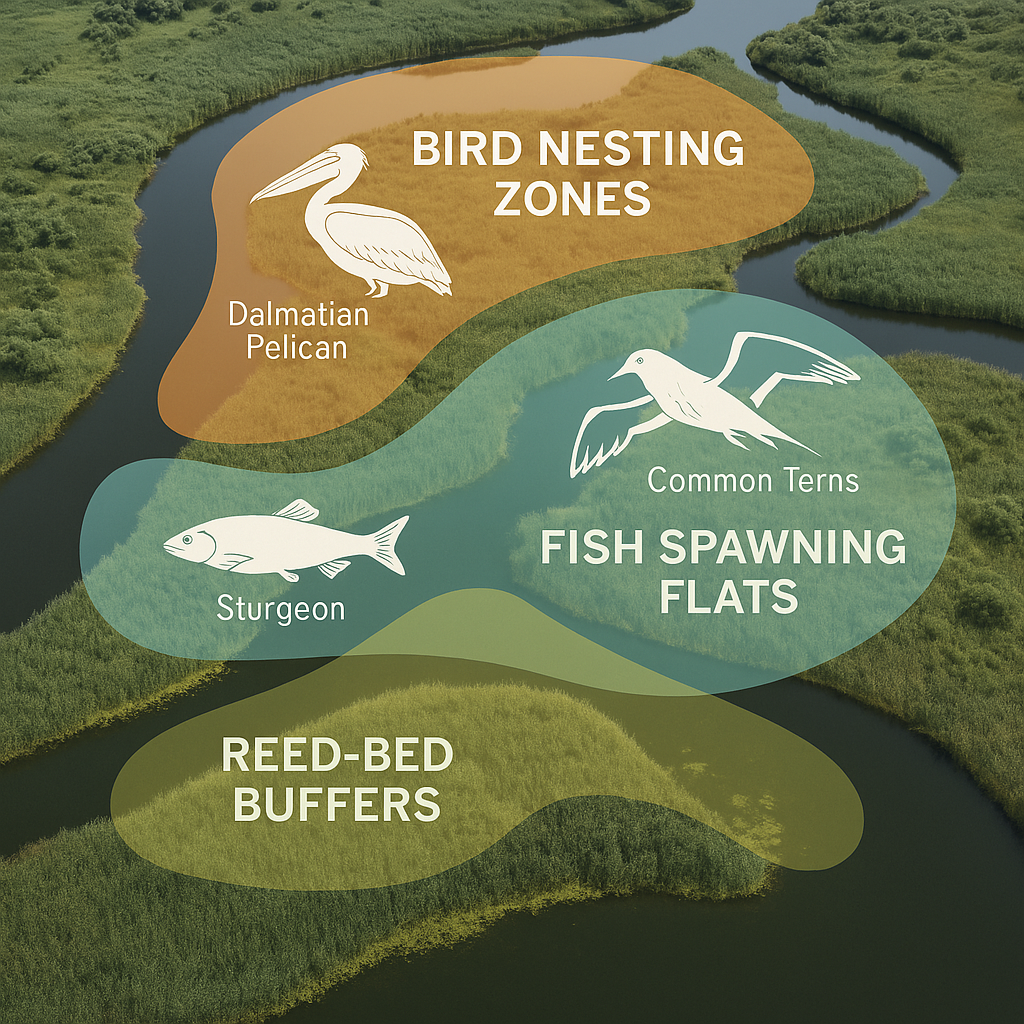
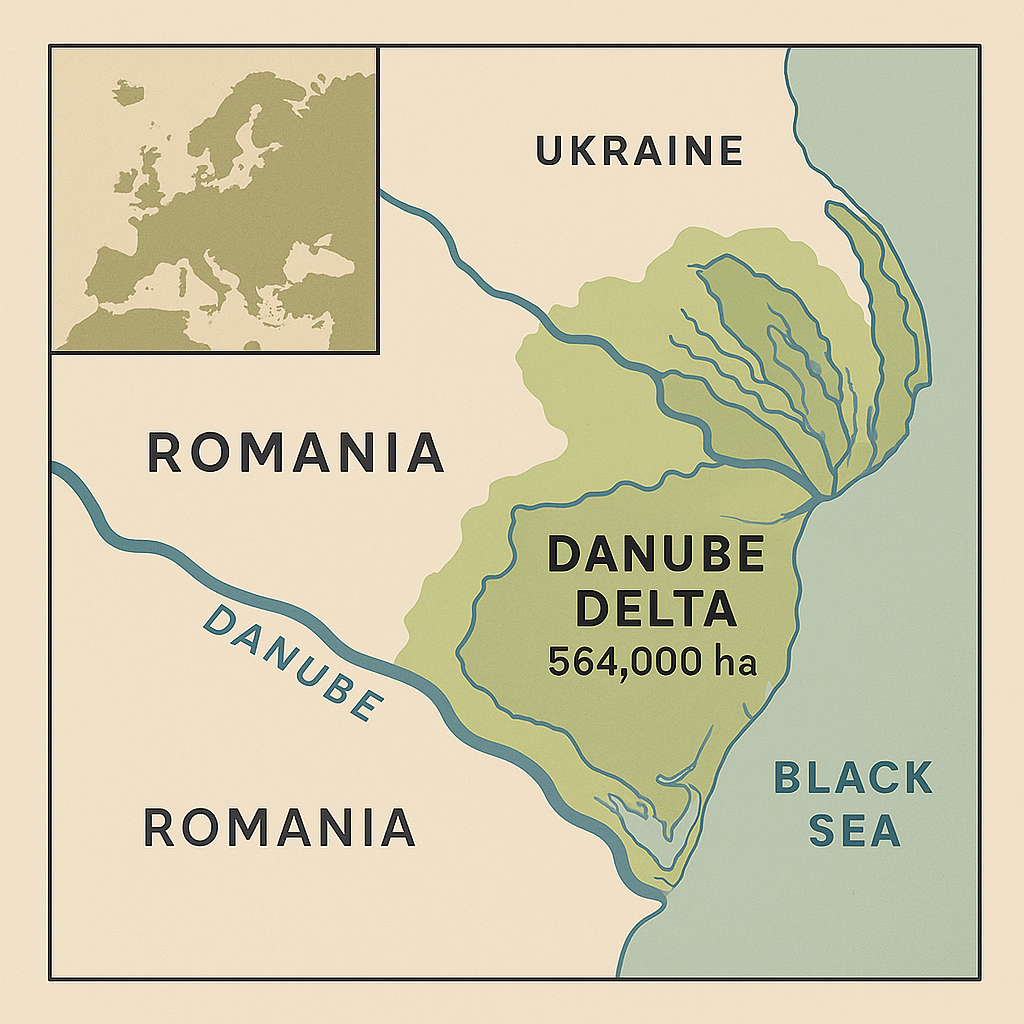
The HydroSerpent is sited within the Sulina Arm of the Danube Delta—Europe’s largest wetland and one of its richest biospheres. The site is characterized by fluvial sedimentation, dynamic hydrology, and a fragile ecology home to over 300 species of birds and 45 freshwater fish. The architecture is embedded in this context not as intervention but as participant. Its meandering footprint mimics the braided morphology of the river. Its materiality and systems are selected to support microbial life, filter silt, shade against thermal spikes, and host amphibious flora. In doing so, HydroSerpent honors place as ecological memory.
3. Design Methodology
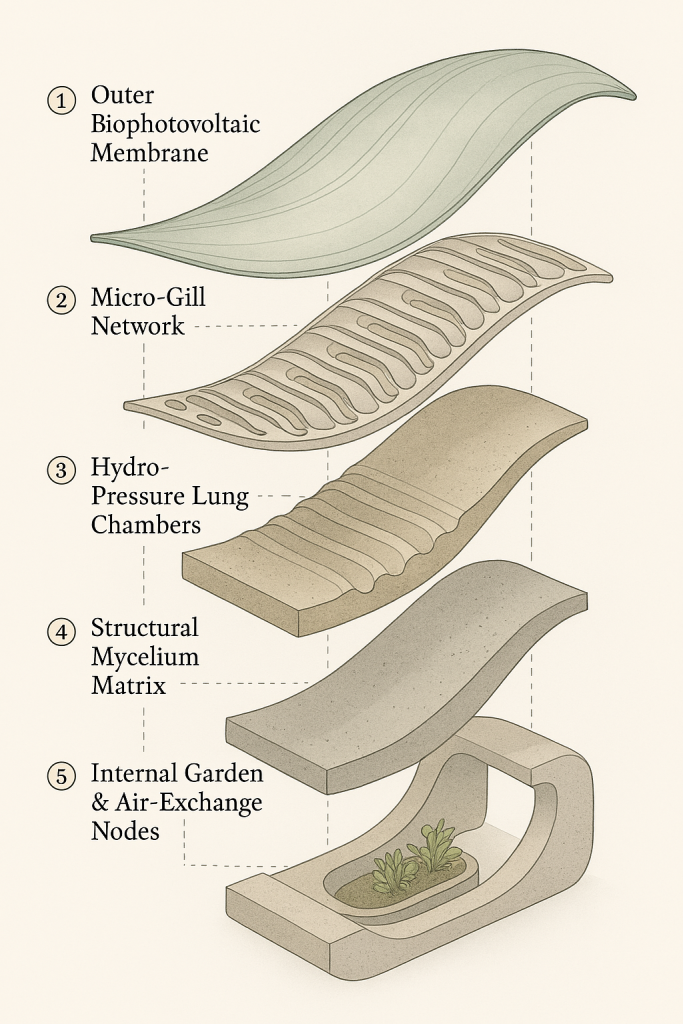
The design process for HydroSerpent is rooted in biomimetic analogs and regenerative strategies. The sinuous form emerged from studies of river snakes and eel-like locomotion, optimized for fluid interaction and energy transfer. Structural components derive from mycelium-based composites and light-absorbing nanocellulose laminates, inspired by the chloroplast-like Casper tech. Spatial configuration followed a nested loop pattern, enabling meditative immersion and layered acoustic control. Design development integrated tools from parametric modeling, ecological simulation, and haptic feedback, aligning digital process with biological logic.
4. Functional Systems and Performance
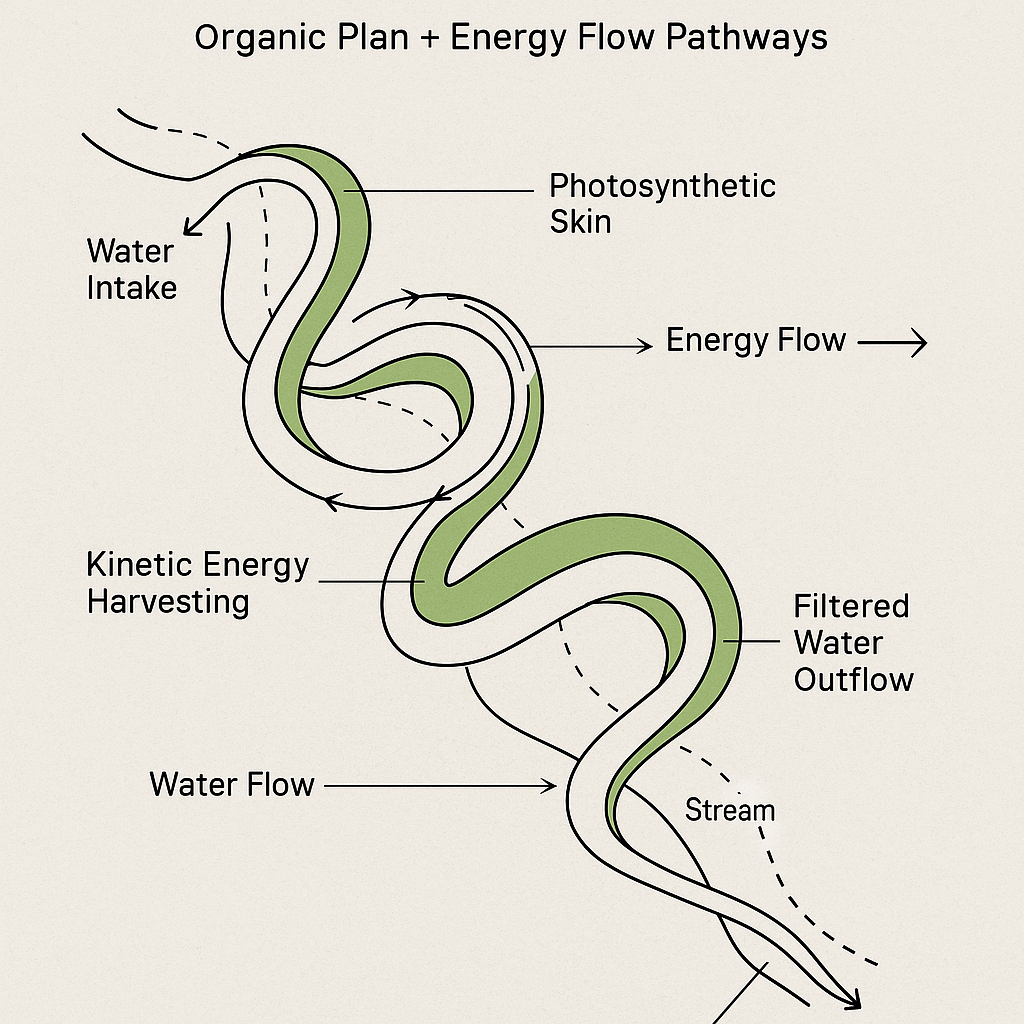
HydroSerpent incorporates several advanced systems engineered to harvest and cycle natural flows:
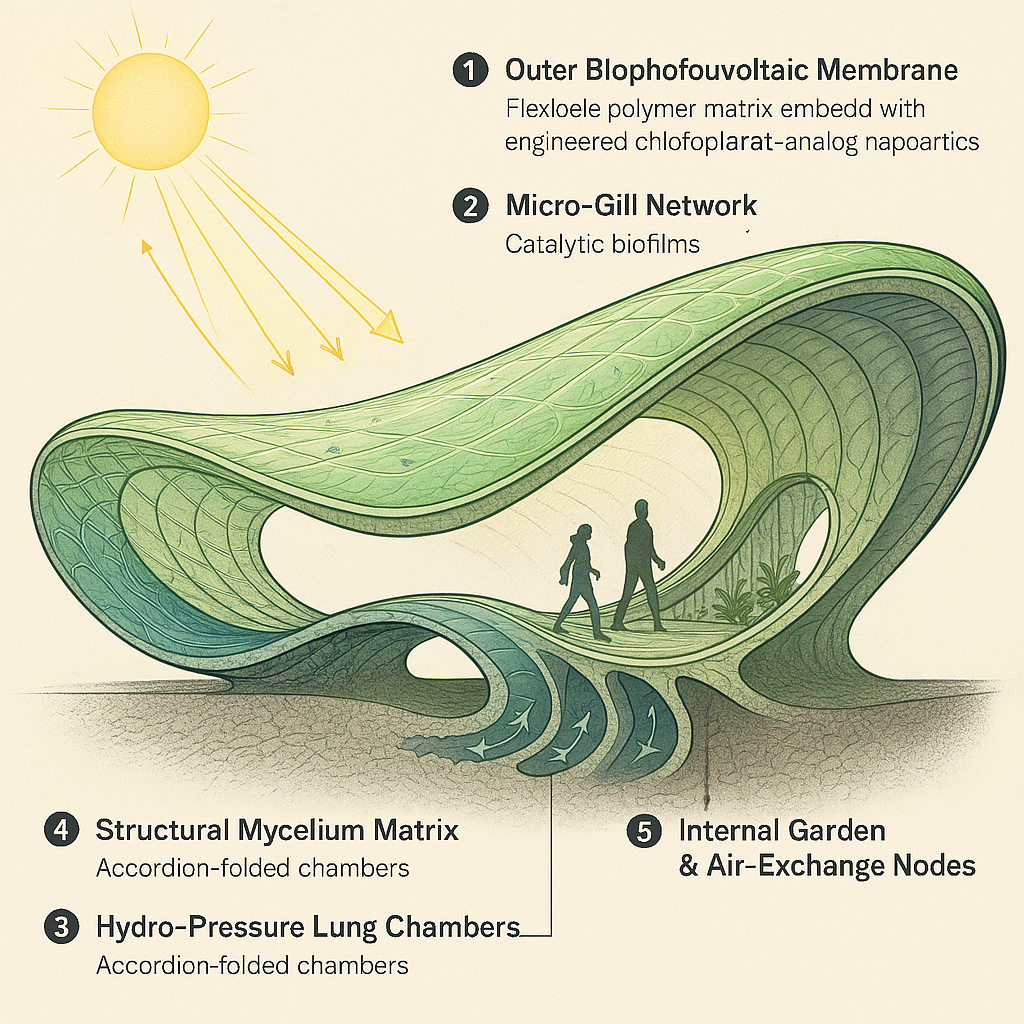
Biophotovoltaic Membrane: The outer skin contains chloroplast-inspired photovoltaic cells capable of converting light into electrical energy. Hydrokinetic Lung Chambers: Subfloor bellows expand and contract with water pressure, powering embedded micro-turbines. Mycelial Air Filtration: Air entering the structure is purified through moss and mycelium-infused wall systems. Water Regeneration: Shallow troughs channel stream water into engineered “gills” that filter, oxygenate, and cool the flow. Circadian Biofeedback: Light, sound, and humidity are modulated through biometric sensors that respond to occupants’ physiology.
5. Human Experience as Healing Interface

The spatial journey through HydroSerpent is calibrated to physiological coherence. Visitors enter through a shaded ramp, where mossy textures and the sound of water slow the breath. As one moves through the translucent corridors, the floor pulses with bioluminescent rhythm, guiding the body into synchrony with architectural breath. Acoustic materials translate hydrological flow into binaural harmonics. The central sanctuary—a spiraled chamber of vines and moonlight—induces parasympathetic calm, reinforced by heart-rate aligned floor vibration. This is not an experience of spectacle but of subtle recalibration—an embodied meditation designed into architecture.
6. Ecological Integration and Impact Metrics
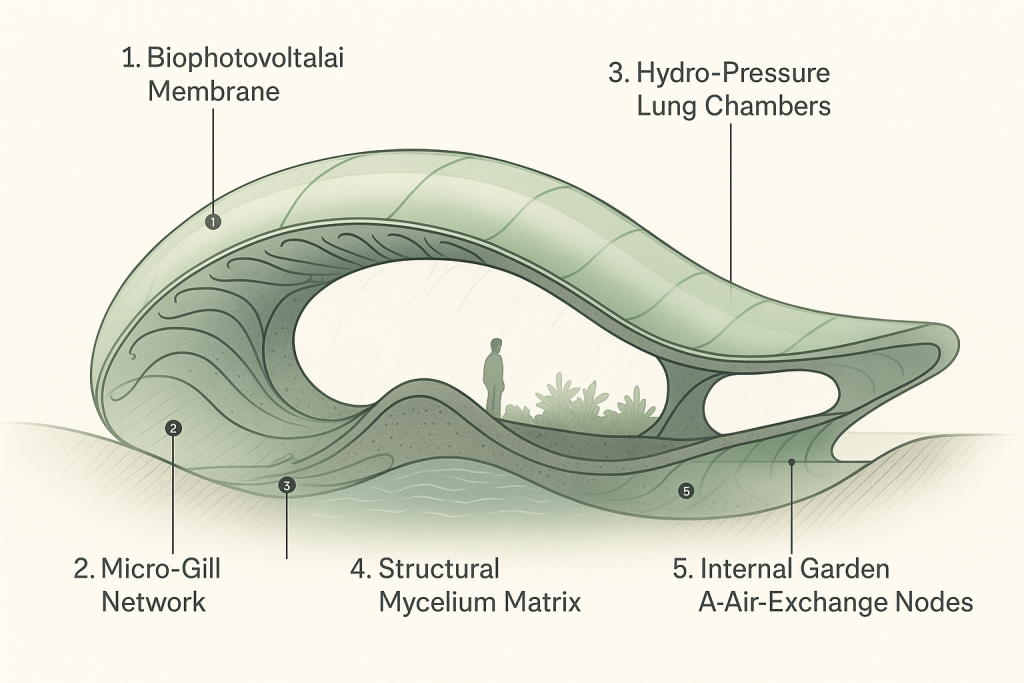
HydroSerpent’s systems are optimized for ecological enhancement and resilience. Its biomaterial shell sequesters carbon during growth and biodegrades with minimal waste. Performance modeling estimates:
Up to 3.5 kW/day from combined hydrokinetic and photovoltaic generation Water filtration capacity of 500–750 liters/day via micro-gill biofilters Ambient temperature modulation by 4–6°C in peak solar conditions Biodiversity enhancement through micro-habitat niches and shaded aquatic zones
Lifecycle analysis confirms a 60% lower embodied carbon footprint than conventional structures of comparable scale.
7. Cultural Implication: From Monuments to Symbionts
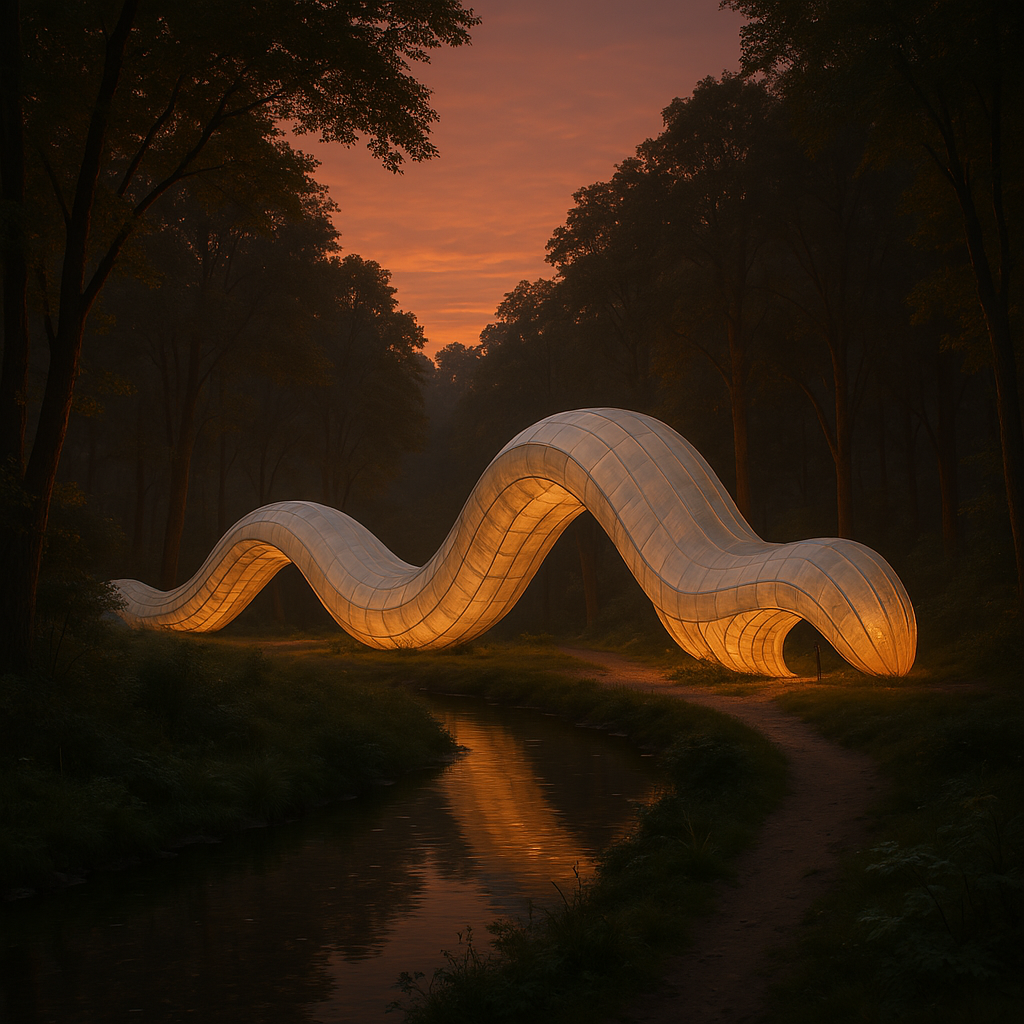
HydroSerpent challenges architectural archetypes. It is not a monument to human dominance, but a vessel of humility—an architecture that listens. Its form and function suggest a return to buildings that collaborate with nature’s rhythms. The serpent—both feared and revered across cultures—here becomes symbol of healing, of ecological intelligence, of liminal transformation. By embracing softness, permeability, and flow, HydroSerpent opens a path toward architectures that are born, not built.
8. Conclusion: Toward Living Infrastructures
As architecture transitions into the post-anthropocentric age, HydroSerpent offers a visionary precedent. It suggests that buildings can be photosynthetic, that space can attune breath, that form can heal. It is a demonstration of what becomes possible when ecological empathy is paired with design ingenuity. HydroSerpent is not an end-state—it is a call to action for architecture to remember how to live.
References
Vincent, J. F. V., et al. (2006). Biomimetics: Its Practice and Theory. Journal of the Royal Society Interface.
Oxman, N. (2015). Material Ecology. MIT Media Lab.
Pawlyn, M. (2011). Biomimicry in Architecture. RIBA Publishing.
Mang, H., & Reed, B. (2012). Designing from Place: A Regenerative Framework.
Salingaros, N. (2006). Principles of Urban Structure. Techne Press.
Leave a Reply